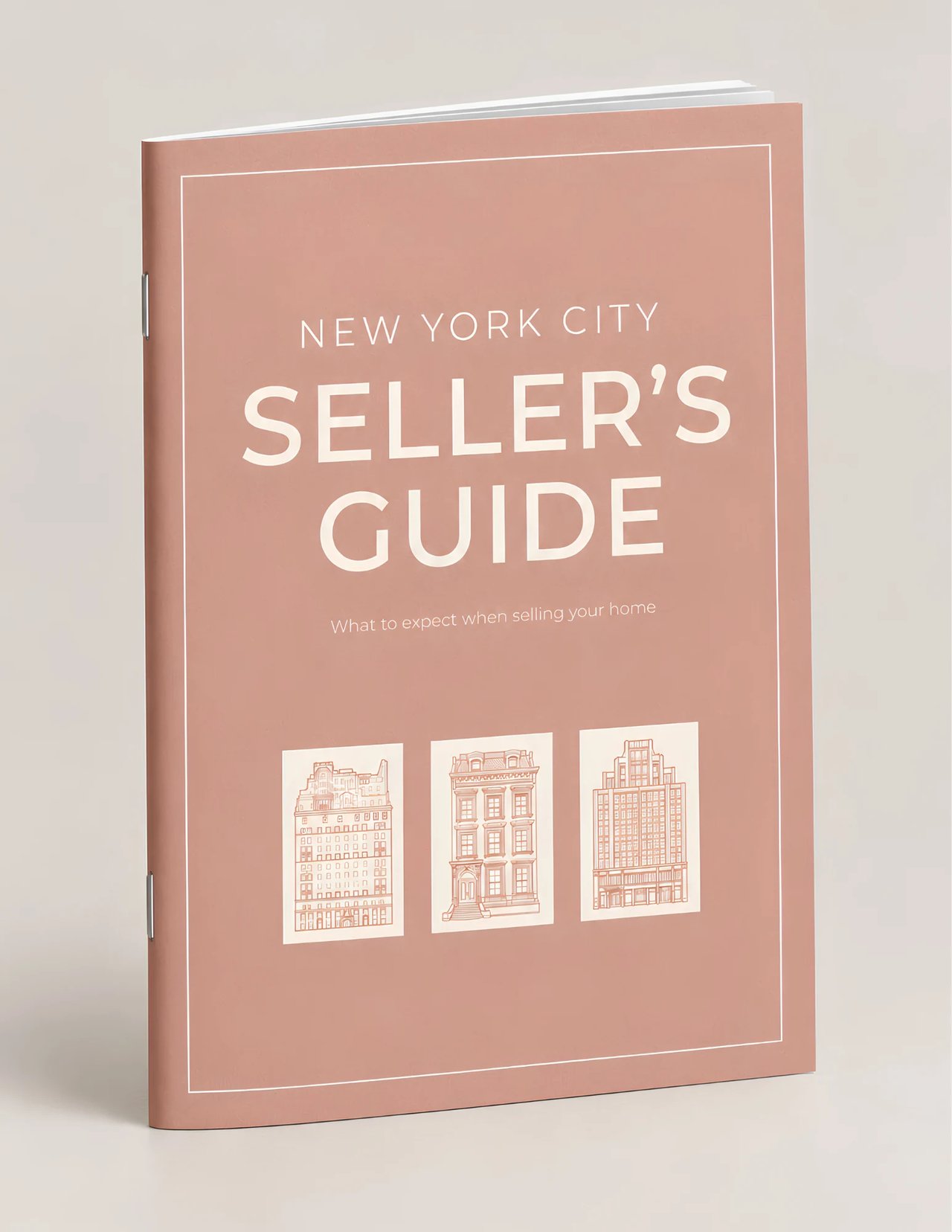
What You Can Expect — The Selling Process at a Glance
Putting your home on the market can be a stressful process, especially when you don’t know what to expect. Understanding these steps can help you prepare and get organized for a streamlined, successful sale.
Discuss your reasons for selling and the ideal timeline. What are your goals? Is it strictly the highest price possible? Or is a perfectly timed transaction more crucial to you?
In the case of a co-op, careful consideration must be paid to the buyer's ability to pass the co-op board approval process. Every building is different, so provide your agent with as much information as possible to help them evaluate offers and potential buyers effectively.
Understand your home’s value and market positioning. Choose an asking price that will attract strong buyers. A good agent will prepare a Comparative Market Analysis (CMA) to compare similar homes in your area and guide your pricing.

Make a powerful first impression! The work and money you put into preparing your home will always pay off if done with careful consideration based on a good agent's professional experience. Simple steps like decluttering and completing small repairs can make a big difference in first impressions, leading to stronger showings and better offers. In some cases, the best route is to hire a professional stager who can advise on decorating and light renovations, helping buyers envision a finished home.
A good agent will have a trusted roster of photographers, floorplan artists, and videographers who can make your listing materials look fantastic. Professional-quality collateral is crucial for effective marketing.
Private Exclusive or off-market exposure is a great way to test pricing and gather market feedback before going public, without accumulating days on market. With one of the largest networks of agents, Compass can offer significant exposure before a listing goes live to the general public.
Listing copy and property storytelling are important tools of the trade. Choose an agent who can convey the qualities of your home in a style and manner that suits both the property and potential buyers. Marketing plans may include digital, email, print, social media, online syndication, and agent-to-agent outreach. The goal of a listing launch is to capture buyer attention at peak interest, which is typically within the first month.
It’s important to maximize open houses and private showings in those first few weeks. Create a seamless and positive buyer experience by making sure the home looks its best, and your agent has easy access to show to accommodate buyers' schedules (think of them as customers!) If you plan on leaving town, please make sure your agent knows and that access is possible while you’re away. These early showings are important for gathering buyer and agent feedback and adjusting strategy if needed.
Once your agent starts receiving offers, they will work to secure the best possible price and terms for you, in co-operation with the buyers. Style of negotiation on price, terms, and contingencies can vary widely, but the goal is to come to a meeting of the minds and keep things friendly so that the deal can close successfully.
A sales contract is issued by the seller’s attorney. Both sides will work on the contract, fine-tuning it to reflect the details of the transaction. The buyer’s attorney will also conduct due diligence in the meantime (see section 10). In NYC, due diligence—including inspections—typically occurs before contracts are signed. Things move quickly at this stage, so it’s important to be available to your attorney to keep the process moving in a timely manner.
Before contracts are signed, the buyer’s attorney will research the home through city databases, title searches, and, for apartments, communication with building management. Buyers may also choose to conduct a home inspection with a professional inspector, though not all buyers will opt for one.
For example, some condo and co-op buyers in NYC often skip inspections, as they can confirm that everything in the apartment is functioning and rely on board minutes and questionnaires requested by the attorney and lender to identify any building issues. If something does come up during an inspection, the buyer may request credits or repairs prior to closing.
Once the terms of the contract have been settled, the buyer will sign and wire 10% of the sales price into an escrow account. After these funds have been received, you will countersign, and the contract of sale becomes binding.
If the buyer is getting a mortgage, they will take the contract to their bank to begin the application process. In NYC, financing can take anywhere from 30–60 days and often takes longer for apartments than for houses, as the bank must approve both the buyer and the building. As part of this due diligence, the bank will order a third-party appraisal of the property. During this time, it’s important that your agent has access to the apartment as needed.
For the purchase of a condo or co-op, the buyer will need to complete an application. Condo applications tend to be simpler and are often processed more quickly than co-op applications. From preparation, to submission, to approval, timelines can vary widely, but the goal is to submit the application to management as soon as possible.
If you are selling an apartment, it’s helpful to understand how long your board typically takes to review applications in order to manage expectations around timing. Please note that if the purchase requires a mortgage, the application will not be submitted until the bank issues a commitment letter. Once the buyer is approved, the closing can be scheduled.
The day before or the day of closing, a final walk-through is scheduled to confirm that the home is in the agreed-upon condition. Appliances and outlets will also be tested, and faucets and plumbing checked for leaks or defects.
Utility accounts should remain open through the walk-through to ensure that everything can be tested. Buyers can arrange for accounts to close automatically the day after closing, ensuring a smooth transition.
Once all requirements have been satisfied to complete the transaction, the attorneys will schedule a closing. At the closing, you will sign all final documents and receive the balance of the sale price. Typically, the keys are handed over to the buyer at the closing. Congratulations!
With careful consideration of each client's needs, Ria strives for a streamlined process to both buying, selling and renting real estate in New York City, with particular expertise in Brooklyn townhomes, Manhattan apartments and the co-op board application process. With the best resources and connections within the real estate industry, every client at every price-point receives high-touch service tailored to their needs.